Outdoor exploration plays an essential role in Montessori education, offering children meaningful opportunities to learn through movement, discovery, and connection with nature.
Nature-based learning supports physical development, concentration, creativity, and emotional well-being. By engaging children in purposeful outdoor activities, Montessori environments extend learning beyond the classroom walls.
Why Outdoor Learning Matters in Montessori
Maria Montessori believed that nature nurtures a child’s natural curiosity and sense of wonder. Time spent outdoors allows children to explore with all their senses, touching textures, observing changes, listening to sounds, and developing awareness of their environment.
Montessori outdoor exploration encourages independence, problem-solving, and respect for the natural world.
Nature-based activities are thoughtfully adapted to meet children at each developmental stage, ensuring experiences are both engaging and developmentally appropriate.
Outdoor Activities for Infants & Toddlers
For infants and toddlers, outdoor learning focuses on sensory exploration and movement. Simple activities such as crawling on grass, touching leaves, or watching clouds help build neural connections and gross motor skills.
Montessori-aligned outdoor ideas for this age group include:
- Nature walks with opportunities to stop and observe
- Exploring natural textures like sand, water, or smooth stones
- Watching birds, insects, or trees move in the wind
These gentle experiences foster curiosity while supporting early physical and sensory development.
Nature-Based Learning for Preschoolers
Preschool-aged children are eager to explore and ask questions. Outdoor environments provide endless opportunities for hands-on learning and imaginative play. At this stage, children benefit from purposeful activities that build independence and concentration.
Popular Montessori outdoor activities for preschoolers include:● Gardening and caring for plants
- Nature scavenger hunts
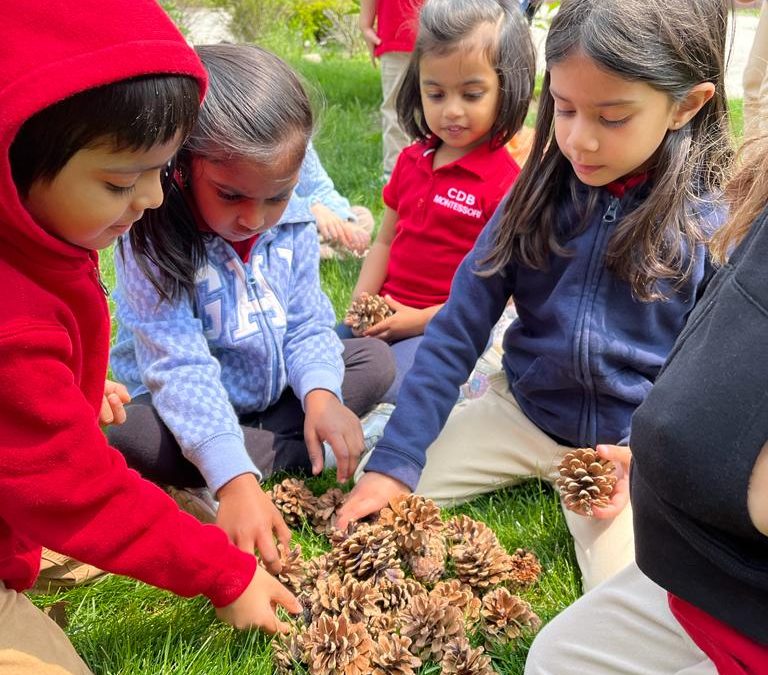
- Sorting leaves, rocks, or pinecones
- Building with natural loose parts
These activities strengthen fine motor skills, problem-solving abilities, and a sense of responsibility.
Outdoor Exploration for Elementary-Age Children
Older children thrive when given opportunities to engage deeply with nature. Montessori elementary programs often emphasize environmental stewardship and scientific observation.
Outdoor activities may include:
- Nature journaling and sketching
- Studying ecosystems and weather patterns
- Measuring plant growth or tracking seasonal changes
- Participating in outdoor group projects
These experiences support critical thinking, collaboration, and respect for the environment.
Encouraging Nature Exploration at Home
Families can support Montessori outdoor learning by prioritizing time outside, even in simple ways. Regular walks, backyard gardening, or unstructured play in nature help reinforce skills learned at school.
Through Montessori outdoor exploration, children develop a lifelong appreciation for nature while building confidence, independence, and curiosity, skills that last far beyond childhood.