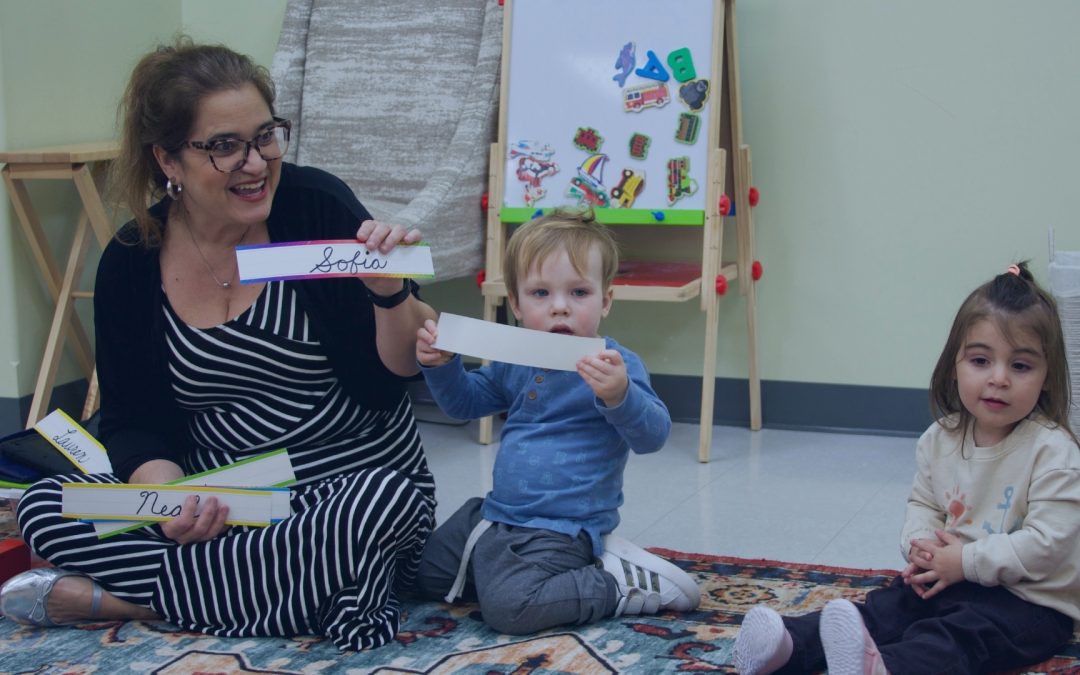
If you peek inside a Montessori classroom at Casa Dei Bambini, you might notice something surprising: when a child makes a mistake, the teacher rarely rushes over to correct them.
Instead, the child notices the error on their own, pauses, adjusts their approach, and solves the problem independently.
This isn’t accidental, it’s the result of a foundational Montessori principle known as the “Control of Error.” Here is how self-correcting materials build cognitive resilience, critical thinking, and a lifelong love of learning in early childhood.
What Is the “Control of Error”?
In a traditional learning setting, the adult is usually the judge of correctness. A teacher marks an answer with a red pen or tells a child, “No, that piece goes there.”
In contrast, Montessori learning materials are engineered so that the material itself provides instant feedback.
-
The Cylinder Block: If a child places a wooden cylinder in the wrong socket, the last cylinder won’t fit. The child instantly sees the discrepancy without needing an adult to point it out.
-
Dressing Frames: If a button is misaligned, the fabric bunches up at the end.
-
Number Cards & Counters: If the count is off, there will be a counter left over—or not enough—at the end of the exercise.
Why Self-Correction Matters for Young Minds
1. Fosters Internal Motivation & Resilience
When feedback comes from the material rather than an adult, mistakes lose their stigma. A mistake isn’t seen as a “failure”; it’s simply a puzzle piece that hasn’t fit yet. Children learn to view challenges with curiosity rather than anxiety.
2. Protects the Child’s Focus and Flow
When adults interrupt a child to correct them, it breaks their deep concentration (what Montessori called “flow”). Self-correcting materials allow children to stay immersed in their work loop for extended periods, building long-term attention spans.
3. Builds Genuine Problem-Solving Abilities
Executive function skills, such as planning, working memory, and flexible thinking, are built when a child must analyze why something didn’t work and try a new strategy.
How Parents Can Practice “Control of Error” at Home
You don’t need formal Montessori materials to foster self-correction at home:
-
Pause Before Intervening: When your child is putting on their shoes on the wrong feet or pouring milk, wait. Give them time to notice and self-correct.
-
Ask Guiding Questions: If they get stuck, ask “What do you notice about this piece?” instead of telling them what to do.
-
Normalize Mistakes: Model healthy responses to your own daily missteps (“Oops, I spilled the cereal! That’s okay, let’s grab a broom and sweep it up together.”).
Preparing Children for the Real World
By allowing children to correct their own work, Montessori education prepares them not just for kindergarten, but for life. They develop into confident, self-directed learners who aren’t afraid of complex problems.
At Casa Dei Bambini Montessori School, our faculty in Aurora creates an environment where children are empowered to explore, discover, and master concepts at their own pace.