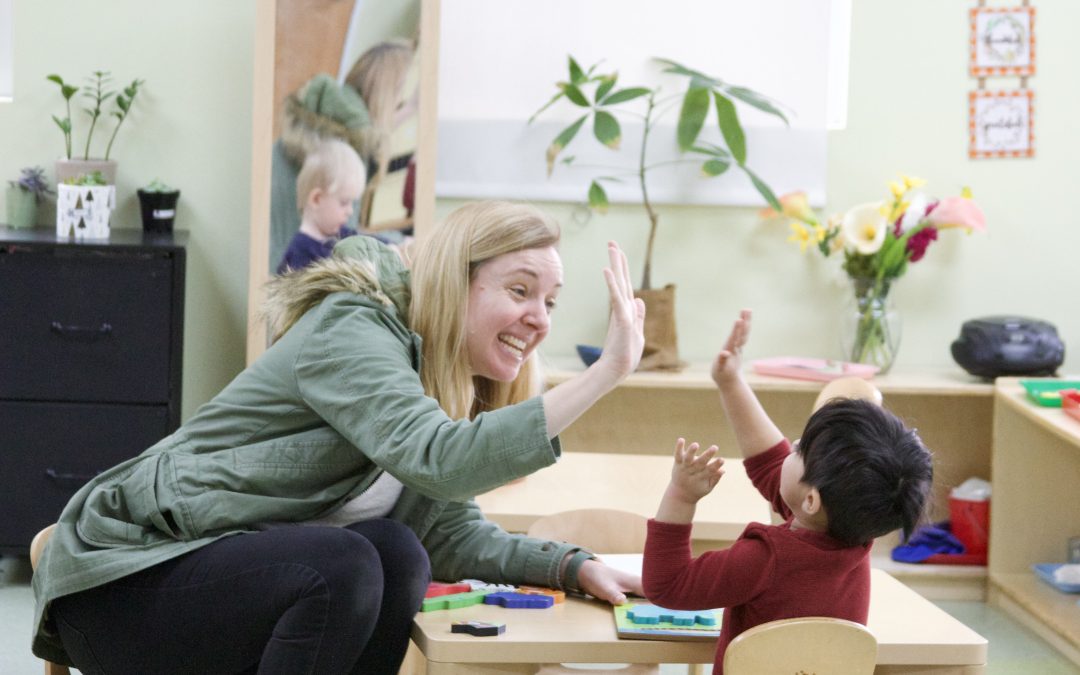
In early childhood, emotions can feel overwhelming. Frustration, excitement, sadness, and anger often show up before children have the language or tools to express what they’re feeling.
In a Montessori environment, emotional regulation is nurtured intentionally, helping children build lifelong skills for self-awareness, empathy, and resilience.
Why Emotional Regulation Matters in Montessori Education
Emotional regulation is the ability to recognize, understand, and manage emotions in healthy ways. Montessori education supports this development by honoring the whole child, socially, emotionally, cognitively, and physically. When children feel emotionally safe and understood, they are better able to focus, learn, and build positive relationships.
Rather than suppressing emotions, Montessori encourages children to name their feelings, explore appropriate responses, and practice self-control at their own pace.
How Montessori Helps Children Navigate Big Feelings
One of the core principles of Montessori is respect for the child. Teachers model calm behavior, use respectful language, and create predictable routines that help children feel secure. This consistency allows children to recognize emotional patterns and develop trust in themselves and their environment.
Montessori classrooms often include:
- Emotion-rich language: Teachers help children label feelings like “frustrated,” “disappointed,” or “excited,” expanding emotional vocabulary.
- Grace and courtesy lessons: Children practice real-life social scenarios, such as resolving conflicts or asking for help.
- Peace corners or calm spaces: These areas allow children to pause, breathe, and regulate emotions independently.
- Choice and independence: Giving children appropriate choices helps them feel empowered and reduces emotional overwhelm.
Supporting Emotional Regulation at Home
Parents can reinforce Montessori emotional development at home by slowing down and acknowledging emotions without judgment. Simple phrases like, “I see you’re feeling upset,” or “That was frustrating,” help children feel seen and heard.
Other Montessori-aligned strategies include:● Modeling calm responses during stressful moments
- Encouraging problem-solving instead of punishment
- Creating routines that provide structure and security
- Offering tools like breathing exercises, quiet spaces, or sensory activities
Building Skills for Life
Emotional regulation is not about eliminating big feelings, it’s about learning how to move through them with confidence and understanding. Through Montessori emotional development practices, children gain skills that support mental health, healthy relationships, and academic success well beyond the classroom.
By guiding children to recognize and manage emotions early, Montessori education lays a strong foundation for compassionate, confident, and resilient learners.